
How smaller towns in Punjab are changing
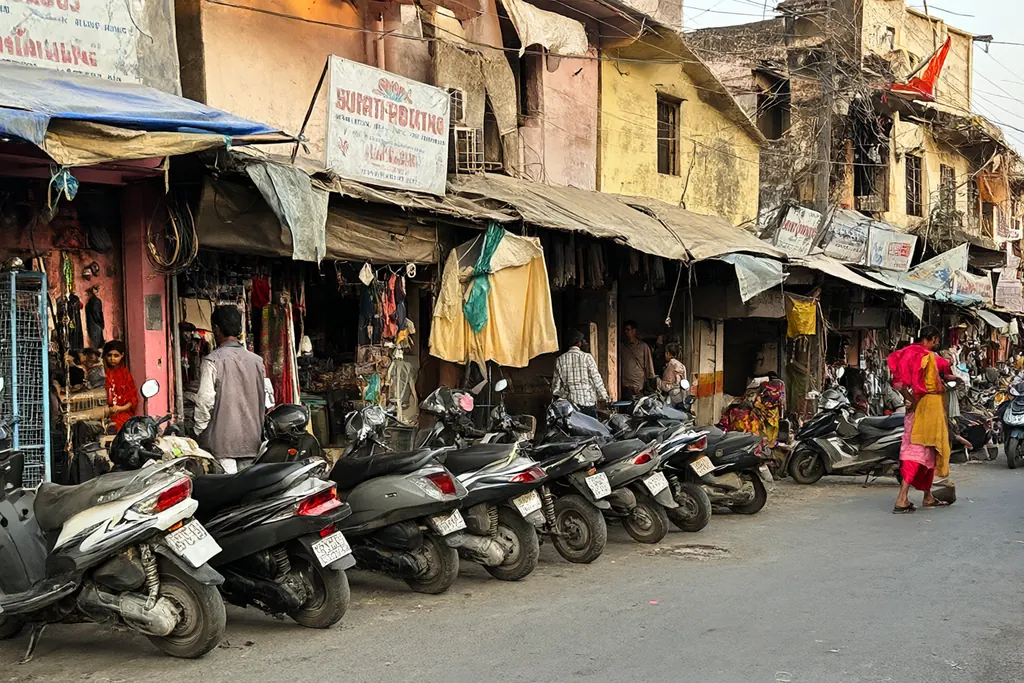
Punjab is often imagined as a state of villages and fields, but much of its change is visible in its smaller towns. District headquarters, market towns and satellite settlements around the larger cities have grown steadily as families move for work, education and services. The result is a kind of growth that is easy to notice and surprisingly hard to describe, because it happens in fragments: a new colony here, a widened road there, a school that suddenly needs more classrooms.
This explainer looks at the general pattern rather than at any single town. It avoids figures for population or construction, and concentrates on the forces that push growth, the pressures it creates and the parts of the process that residents can actually influence.
What draws people towards towns
The first pull is work. Agriculture employs fewer people than it once did, and households look for income that does not depend on a single harvest. Small towns offer that through trade, transport, construction, workshops, education and health services. The second pull is access: a town is where the college, the hospital, the bank branch and the government office are found. For many families, moving in is a way of shortening the distance to services that shape the whole of life.
Housing and the spread of new colonies
Growth shows up first as housing. Land on the edge of a town is divided into plots, roads are laid out, and a new colony appears, often in stages. Some of this is formally planned; some grows ahead of approvals and is regularised later. The difference matters, because it determines whether a settlement begins with drains, street lighting and a water connection, or acquires them gradually and unevenly. Either way, the town's built edge moves outward rather than upward, which is why land use becomes a permanent local argument.
Services under pressure
Infrastructure rarely arrives at the same speed as people. Water supply, drainage, waste collection, public transport and school places are all planned for one level of demand and then face another. When that happens, the shortfall is usually absorbed by households themselves, through borewells, private tankers, septic systems, generators and private transport. This is not a failure unique to Punjab; it is what rapid growth looks like almost everywhere. But it explains why the quality of daily life in a growing town can vary so much from one street to the next.
Markets, transport and the shape of a town
A town's character is often set by what it trades and how it is connected. A town on a major road becomes a transport and warehousing centre; one near a mandi or an industrial area grows around that activity; one close to a large city becomes a dormitory for commuters. The bus stand, the grain market and the main bazaar tend to organise movement and commerce, and their congestion is a reliable sign that the town has outgrown its original layout.
What residents can influence
Individual households cannot decide how a town grows, but they can influence the parts that determine life on their own street. Participating in local bodies, insisting on written approvals before buying a plot, keeping records of civic complaints, and organising neighbourhoods around shared problems such as drainage and waste are all practical forms of leverage. Growth itself is hard to steer; the way it is absorbed is not entirely out of local hands.
Signs a town is growing faster than its services
- New colonies appearing ahead of piped water and sewerage.
- Longer peak-hour delays at the bus stand, grain market and main crossings.
- Schools and health facilities running beyond their planned capacity.
- More reliance on private borewells, tankers and generators.
- Farmland on the edge being subdivided for plots.
What growth brings, and what it strains
| Change | Why it happens | What it puts pressure on |
|---|---|---|
| New housing colonies | Families arriving for work and services | Water, drainage and street lighting |
| More vehicles | Longer commutes and rising incomes | Roads, parking and public transport |
| Expanding markets | Trade and agricultural activity | Congestion and waste management |
| New schools and clinics | Younger population and demand for access | Staff, classrooms and equipment |
| Edge-of-town land use | Land divided for plots | Planning, agriculture and local revenue |
Why this matters for the state
The growth of smaller towns is one of the clearest signs of how Punjab is changing, and it is where many of the state's practical challenges are concentrated: water, waste, transport, housing and access to services. None of these has a single solution, and the pace of growth is not something any one actor controls. What can be managed is the order in which the strain is addressed, which is why local planning, written approvals and organised neighbourhoods matter more than they might appear to from a distance.
Read next
The farming year in Punjab, season by season
How the agricultural calendar is organised and why the rhythm of sowing and harvest shapes everything else.
Canal irrigation: how water reaches the fields
The path from a canal head to a farmer's field, and why distribution is a shared responsibility.
Choosing a school or college: what to look at first
A practical checklist for families comparing institutions, beyond the brochure.