
Canal irrigation: how water reaches the fields
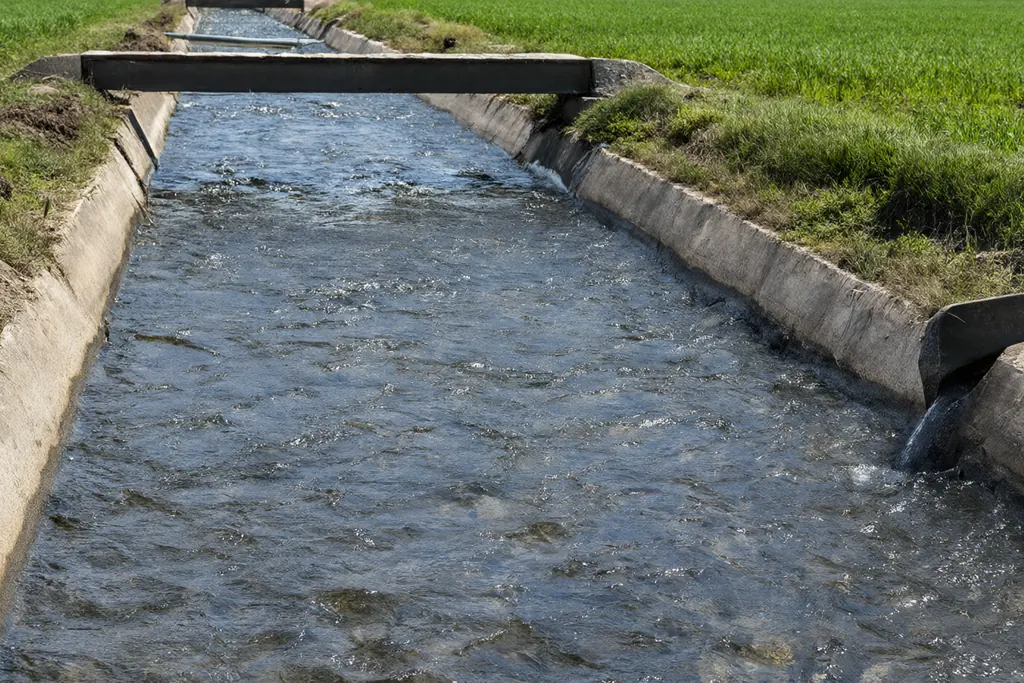
Canal irrigation is one of the quiet systems that makes large-scale farming possible in Punjab. Water leaves a river, travels along a hierarchy of channels, and is divided again and again until it reaches individual fields. Most people see only the last step, so the wider system is worth explaining: how it is organised, how the division is decided and why maintenance is a shared obligation rather than somebody else's job.
This explainer describes the general structure of canal irrigation. It avoids specific figures for flow, length or allocations, because those are set administratively and change over time. The principles, however, are stable and are what a reader needs in order to follow the subject.
Where the water begins
A canal system starts at a headworks, where water is diverted from a river into a main channel. From there it flows by gravity, which is why canals follow gentle gradients over long distances and why the layout of a system is tied so closely to the lie of the land. Because the water is not pumped but guided, the engineering is mostly about levels: keeping the channel high enough to serve the fields around it, while never so steep that the flow damages the banks.
The branching network
The main channel divides into branches, which divide again into distributaries and minor channels, and these finally feed watercourses that carry water to the fields. Each level has a defined command area, the group of fields it is designed to serve. This hierarchy is what allows a very large area to be supplied from a single diversion point, but it also means that a blockage or a breach at one level is felt at every level below it.
How the turns are divided
Water is not delivered continuously to every field at once. Instead it is rotated according to a published schedule, so that each holding receives water for a set period in turn. This rotation is the part growers know best, because it determines when they must be in the field, often early or late in the day. It is also the part most likely to generate dispute, which is why the schedule is written down and why disputes are usually resolved by appeal to it rather than by argument in the moment.
Maintenance as shared work
Canals carry silt, and channels lose capacity if they are not cleared. Some of that work is done by the authorities during scheduled closures; some of it falls to the users of a watercourse, who are expected to clean and repair the section that serves them. This makes canal irrigation a cooperative system in a very practical sense: the water is shared, but so is the obligation to keep it flowing. Where that shared obligation is neglected, everyone downstream suffers first.
Why the system matters so much
In a region where rainfall alone is not enough for the crops that are grown, the canal network decides which fields are irrigated and when. That is a powerful fact about rural life. It also explains the persistent interest in water: discussions about lining channels to reduce seepage, about the balance between canal water and groundwater, and about the efficiency of the whole chain are really discussions about who gets water, how reliably, and at what cost.
Things worth understanding about the system
- Water moves by gravity, so the level of each channel matters more than its size.
- Each channel serves a defined area, and every level depends on the ones above it.
- Delivery is rotational, which is why a published schedule exists and carries weight.
- Clearing and repair are partly the responsibility of the users themselves.
- Seepage and silt are permanent features that the system is managed around.
The layers of a canal network
| Level | What it is | Why it matters |
|---|---|---|
| Headworks | The point where water is diverted from a river | Sets the volume that the whole system can carry |
| Main channel and branches | The largest carriers | Move water across long distances with minimal loss of level |
| Distributaries and minors | The dividing channels | Split the supply between defined blocks of land |
| Watercourses | The final carriers to the fields | The stretch most farmers maintain themselves |
| Field outlets | Where water enters the land | The last control point before the crop is watered |
The bigger picture
Canal irrigation works because it is orderly: a hierarchy of channels, a published rotation and a shared duty of upkeep. It is not a tap that can be turned on at will, and treating it that way is what causes most friction. For anyone following water policy in Punjab, the useful questions are practical ones: how well the channels are maintained, how fairly the schedule is followed and how the system is balanced against groundwater. Those questions, rather than any single figure, decide how the fields get watered.
Read next
The farming year in Punjab, season by season
How the agricultural calendar is organised and why the rhythm of sowing and harvest shapes everything else.
How smaller towns in Punjab are changing
What draws people to district towns and how services struggle to keep pace with growth.
Choosing a school or college: what to look at first
A practical checklist for families comparing institutions, beyond the brochure.