
Green space: the city's quiet infrastructure
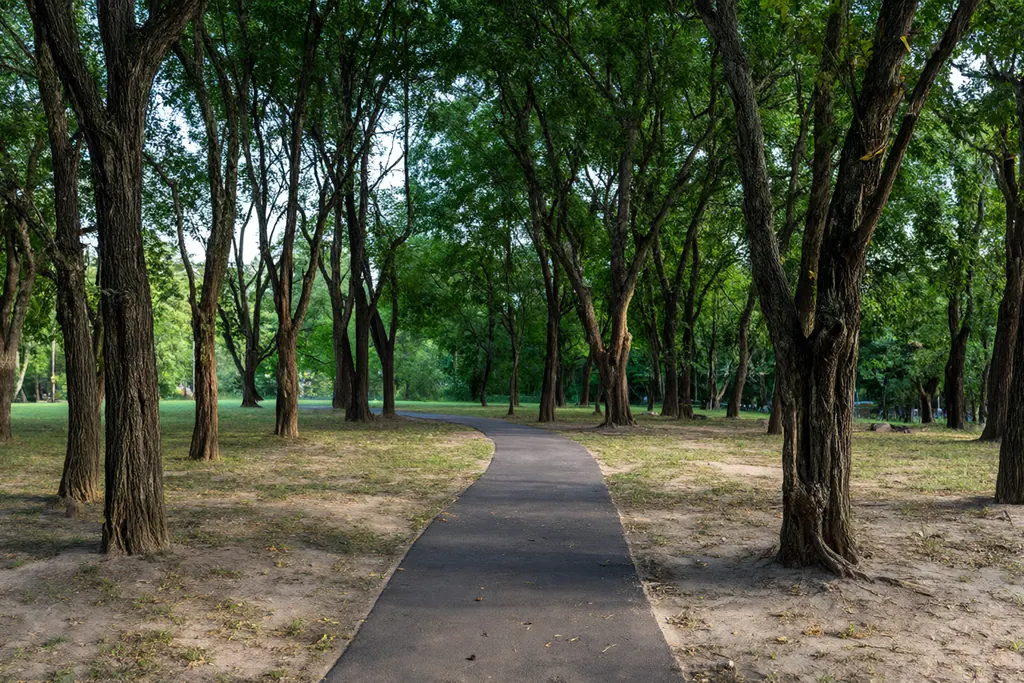
Green space in Chandigarh is easy to mistake for scenery. It reads as pleasant, generous and slightly decorative, and because it is everywhere it quickly becomes background. But the trees, belts and valleys do real work: they cool the city, absorb rain, provide routes for walking and give a dense urban area a continuous landscape. This explainer looks at green space as infrastructure rather than ornament.
The account is general and avoids figures for area or tree counts, which vary with measurement and time. It concentrates on what green space does and why its protection is a practical question rather than an aesthetic one.
Open land as part of the plan
The founding plan of the city treated open land as one of its components, not as whatever remained after building. Green belts were drawn between neighbourhoods and larger leisure areas were threaded through the layout. Because the decision was made early, the land was reserved before it became expensive, which is the only moment at which such a decision is easy. The result is a city where vegetation is encountered on ordinary journeys, not only at the end of one.
Cooling and shade
Trees reduce the temperature of the air around them through shade and evaporation, and a continuous canopy along a road changes how that road feels at midday. In a city with long hot summers this is not a small comfort but a form of climate control that costs nothing to run. Shade also makes walking and cycling realistic, which reduces the demand for motorised trips and the heat that vehicles add to the streets.
Drainage and water
Open ground absorbs rainfall that paved surfaces cannot. Where green belts and valleys exist, water has somewhere to go during heavy rain, which reduces the load on drains and lowers the risk of local flooding. Trees and soil also slow runoff and filter it as it moves. This means that green space is part of the city's water management, whether or not it is described that way, and that paving over an open area has consequences well beyond the loss of a view.
Routes for people
Continuous green corridors provide somewhere to walk, run and cycle without competing with traffic. Because the belts connect parts of the city, they function as a network of quiet routes, which is particularly valuable for children, older residents and anyone unwilling to travel on fast roads. A park that is only reachable by car delivers a fraction of what a connected corridor delivers, which is why continuity matters more than the size of any single garden.
Looking after what was given
Green space needs maintenance: planting, pruning, watering through dry periods, repair of paths and control of encroachment. It is also the part of the plan most easily lost piece by piece, since each individual proposal to use a patch of open land looks small on its own. Protecting the network therefore depends on treating it as a system, and on recognising that the value lies in the connections between areas rather than in any one of them.
What green space does for the city
- Lowers air temperature and provides shade along ordinary routes.
- Absorbs rainfall and reduces the load on drains during heavy showers.
- Offers continuous walking and cycling routes away from traffic.
- Gives birds, insects and small wildlife somewhere to live within the city.
- Separates neighbourhoods and gives the built area a readable structure.
Green space as working infrastructure
| Function | How it works | What is lost if it goes |
|---|---|---|
| Cooling | Shade and evaporation lower local temperatures | Hotter streets and more demand for cooling |
| Drainage | Soil absorbs and slows rainfall | Faster runoff, blocked drains and local flooding |
| Movement | Continuous corridors carry walking and cycling | More car dependence and less safe routes |
| Habitat | Trees and undergrowth shelter wildlife | Reduced biodiversity within the city |
| Structure | Belts separate neighbourhoods | A harder city to read and navigate |
Green as a habit, not an ornament
The value of Chandigarh's green space lies in it being continuous and ordinary: encountered on the way to work, not only on a day out. That is what makes it infrastructure. Maintaining it therefore means protecting connections as much as individual areas, and resisting the steady, small erosion that open land is always subject to. A city that keeps its green network keeps shade, drainage, habitat and quiet routes at the same time, all of which are difficult and expensive to replace later.
Read next
Why Chandigarh looks the way it does
The idea behind a planned city and how a single master plan still shapes daily life.
How the sector system works
Numbering, addresses and orientation: reading Chandigarh's layout without a map.
Modern architecture and the city's heritage
What makes the buildings here distinctive and how that heritage is looked after.