
How a music festival comes together
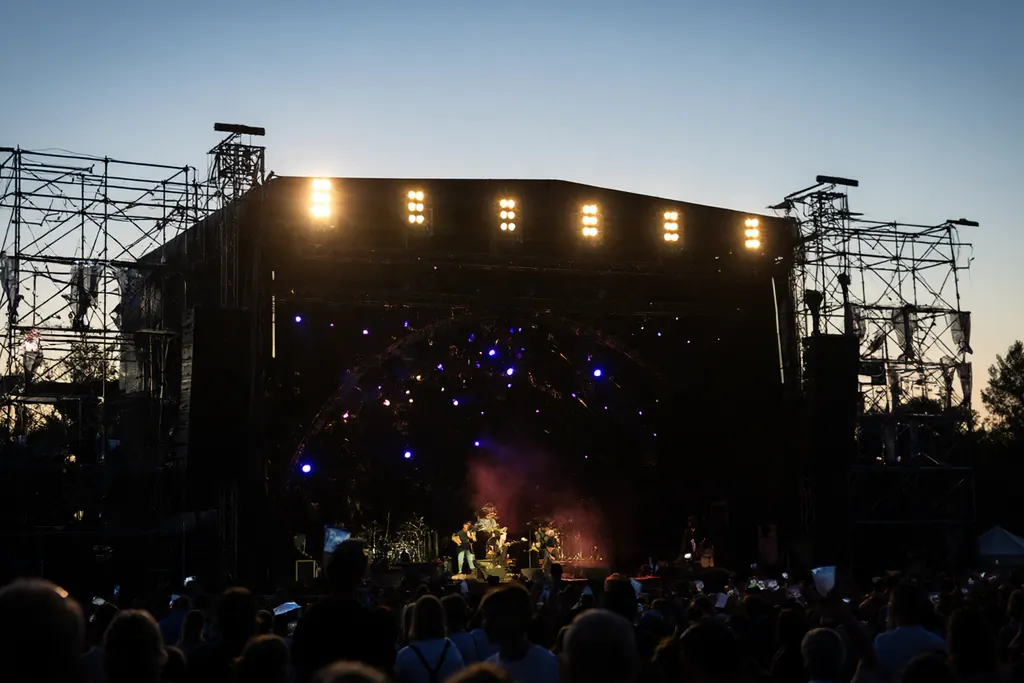
A music festival looks like a weekend of performances. In fact it is a temporary town: stages, sound, power, water, food, security and transport all have to be assembled, coordinated and dismantled in a very short time. Understanding how a festival is put together explains why line-ups are arranged the way they are and why weather can transform an event that looked straightforward on paper.
This explainer describes the general mechanics. It avoids specific festivals, venues and attendance figures, and concentrates on the planning decisions that shape any live music event.
Starting with the site
The site comes first, because everything else depends on it. Access roads, drainage, ground conditions, distance from residential areas and the availability of power determine what kind of festival is possible. A site with good drainage tolerates rain; one without it does not. Capacity is set by how many people the site can hold and move safely, not by how many tickets it would be attractive to sell. This is why festival planning begins with surveys rather than with a wish list of performers.
Stages, sound and the neighbours
Multiple stages introduce a technical problem: sound from one must not overwhelm another, and both must stay within limits agreed with the surrounding area. Stages are therefore positioned with distance and direction in mind, and schedules are staggered so that the loudest moments do not coincide. Sound engineering at this scale is as much about restraint as volume, and a festival's relationship with its neighbours is settled largely in decibels.
Scheduling the line-up
A line-up is a logistical puzzle as well as an artistic choice. Set times must account for changeovers between acts, the availability of performers, the size of the audience each will draw and the flow of people between stages. Headliners usually take the largest stage at the end of the day because that is when the audience is largest, but the arrangement of the rest is often decided by crowd movement as much as by reputation. Overlapping two popular acts creates congestion; separating them spreads the crowd.
Safety, welfare and the unglamorous essentials
The parts of a festival that matter most are the ones audiences rarely notice: stewarding, medical provision, drinking water, toilets, lighting in circulation areas, a clear plan for evacuation and a defined response to severe weather. These are planned in advance and rehearsed, because a festival is a large gathering in an open space and both of those facts carry risk. The better the planning, the less visible it is.
After the last note
Dismantling is as demanding as building. Equipment is removed, the site is restored, waste is processed and the ground is assessed for damage. Festivals that return year after year treat this stage as part of the operation rather than an afterthought, because the condition in which the site is left determines whether it can be used again. In that sense a festival's final performance is its exit.
What a festival has to get right
- Site selection, including access, drainage and distance from homes.
- Sound limits and staging that keep stages from competing.
- A schedule built around changeovers and crowd movement.
- Safety, medical cover, water and lighting in circulation areas.
- Site restoration, which decides whether the event can return.
Planning a festival, stage by stage
| Stage | Main decision | Why it matters |
|---|---|---|
| Site survey | Whether the location can hold the event | Sets capacity and what is possible |
| Layout | Where stages, entrances and facilities go | Controls sound, flow and safety |
| Scheduling | Set times for every act | Prevents congestion and technical clashes |
| Welfare and safety | Medical, water, toilets and evacuation | Protects the audience and the licence |
| Restoration | How the site is returned to normal | Determines permission for future events |
A weekend built on months of preparation
A festival is best understood as a piece of temporary infrastructure with a programme attached. Site, sound, scheduling, welfare and restoration are all decided long before the first act appears, and the quality of those decisions is what an audience experiences as a good weekend. The music is the point, but the organisation is what makes the point possible.
Read next
Regional cinema: why language matters
How films rooted in a language and place find their audience.
Streaming and cinema: two ways to watch
What each format does well and how they change what gets made.
How cultural awards are decided
Juries, categories and the judgements behind an award season.